Solid timber, veneer or MDF: what you are really paying for
10 October 2026 · OZ Furniture
solid timbermaterialsdining tablesbuying guide
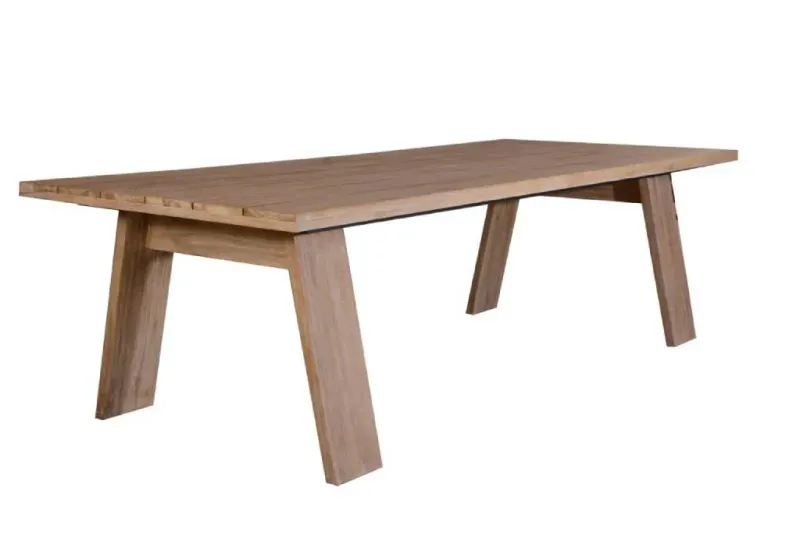
Two dining tables can look alike in a photo and be built in very different ways. One is solid timber all the way through. One has a thin layer of real wood over a board. One has a printed surface on MDF. None of these is a trick, and each one is right for some homes. Here is what you are paying for with each, and which of our tables use it.
Solid timber
A solid timber dining table is cut from timber in every part you can see. That brings three things.
- It can be repaired. A scratch or a ring can be sanded back and the surface refinished.
- Every piece is different. Grain, colour and knots vary from table to table.
- It moves a little. Timber takes up and gives off moisture with the seasons, so it can shift slightly over the years. That is normal for real wood.
Solid timber usually costs more, because you are paying for more wood and more work.
From our range:
- Gogi Solid Oak Dining Table, 135cm, Natural is solid oak with a natural finish, 135 x 80 cm. A compact table for a smaller dining space.
- Momus Solid Eucalyptus Dining Table, 260cm, Brushed is solid eucalyptus, a dense timber with a high natural oil content. It is 260 x 110 cm, with an ED-coated metal support under the top.
Veneer
Veneer is a thin sheet of real timber glued over a core board, often MDF. The surface is real wood with real grain. The core under it is flat and stable, which makes wide tops and shaped bases easier to build.
The trade-off: veneer is thin. You can only sand it very lightly, and a deep gouge can go through to the board below.
From our range:
- Airlie Round Dining Table 120cm, Natural Elm Veneer is elm veneer and MDF, 120 cm round, on a closed leg design for strength.
- Loxley Oval Extendable Dining Table 160–200cm, Natural Oak is MDF with oak veneer. It extends from 160 cm to 200 cm and stands on two half-cone pedestal legs.
Solid and veneer together
Many tables mix the two: solid timber where strength matters, veneer where a wide, flat surface matters. The product page will say "solid and veneer", or name which part is which.
- Atherton Marri Timber Dining Table, 240cm, Natural is solid and veneer Marri, a West Australian hardwood. It is 240 x 120 cm.
- Patchwood Extendable Dining Table 170–230cm, Black Oak Parquet has solid oak legs and a veneer top with a geometric parquet pattern, in sandblasted black.
Is MDF furniture good?
For the right job, yes. MDF (medium-density fibreboard) is wood fibre bonded with resin and pressed into a board. It is flat, even and does not split along a grain, because it has none. On its own it is plain, so it gets a surface: a paint, a veneer, a paper foil or a melamine layer.
A paper foil or melamine surface is printed. That is how a table gets a marble or travertine look at a lower price and weight than stone. Two things to know: a printed surface cannot be sanded back, and MDF can swell if water gets into a chipped edge.
From our range:
- Haven Rectangular Dining Table 180cm, White Travertine-Look Top has a top and base in MDF with a paper foil finish, in a white travertine look. The single ribbed pedestal keeps the corners clear of legs.
- Primo Dining Table 200cm, Grey Marble-Look Top, Black Metal Legs has a grey marble-look top in MDF with melamine. Its maker describes the surface as heat and scratch resistant. The legs are metal with a sandy black powder coat.
Neither is stone. They give the look of stone in a lighter material, and we say so on the page.
Side by side
| | Solid timber | Veneer | MDF with a printed surface |
|---|---|---|---|
| Surface | Real timber all through | Thin real timber over a board | Printed paper foil or melamine |
| A deep scratch | Sand and refinish | Light sanding only | Cannot be sanded |
| Look | Varies piece to piece | Real grain on a stable core | A printed pattern |
| Price | Usually highest | Usually in the middle | Usually lowest |
How to read our product pages
Every OZ product page has a list called "The details". Look for the line that says Material, Frame or Top.
- "solid oak timber" or "solid eucalyptus": solid timber.
- "solid and veneer": a mix of both.
- "MDF with oak veneer" or "elm veneer and MDF": veneer over a board.
- "MDF with a paper foil finish" or "MDF with melamine": a printed surface.
- "-look" in the name: it is a look, not the material.
Good to know
- Read the Material line before you order. It tells you more than the photo.
- Natural timber varies. Solid and veneer tables show their own grain and colour, and your screen can show colour slightly differently from the real piece.
- Measure the way in. Check doorways, hallways and stairs against the size on the product page. Some long tables, like the Momus, come flat-packed.
- Delivery. Mid to large items mostly go by furniture removalist, who texts you the day before delivery. See our delivery page for details.